Raising the Bar: Why 2025 Moved Construction Beyond “Digital Tools” to “Operational Intelligence”
2025 made one thing clear: having digital systems is no longer the competitive advantage — it’s the baseline.
The real test is no longer whether you have data, but what that data does when site conditions change on a random Tuesday. When work overlaps and responsibilities shift unexpectedly, teams don’t need more dashboards. They need systems that turn signals into clear, decisive actions without stopping the clock.
That’s where construction management is heading.
And in 2025, Hubble focused on strengthening the parts of the system that make this possible.
From passive data to situational awareness
Many platforms "show" information; Hubble now contextualises it. On a congested site, knowing a permit is active is useless unless you know if the zone is physically ready.
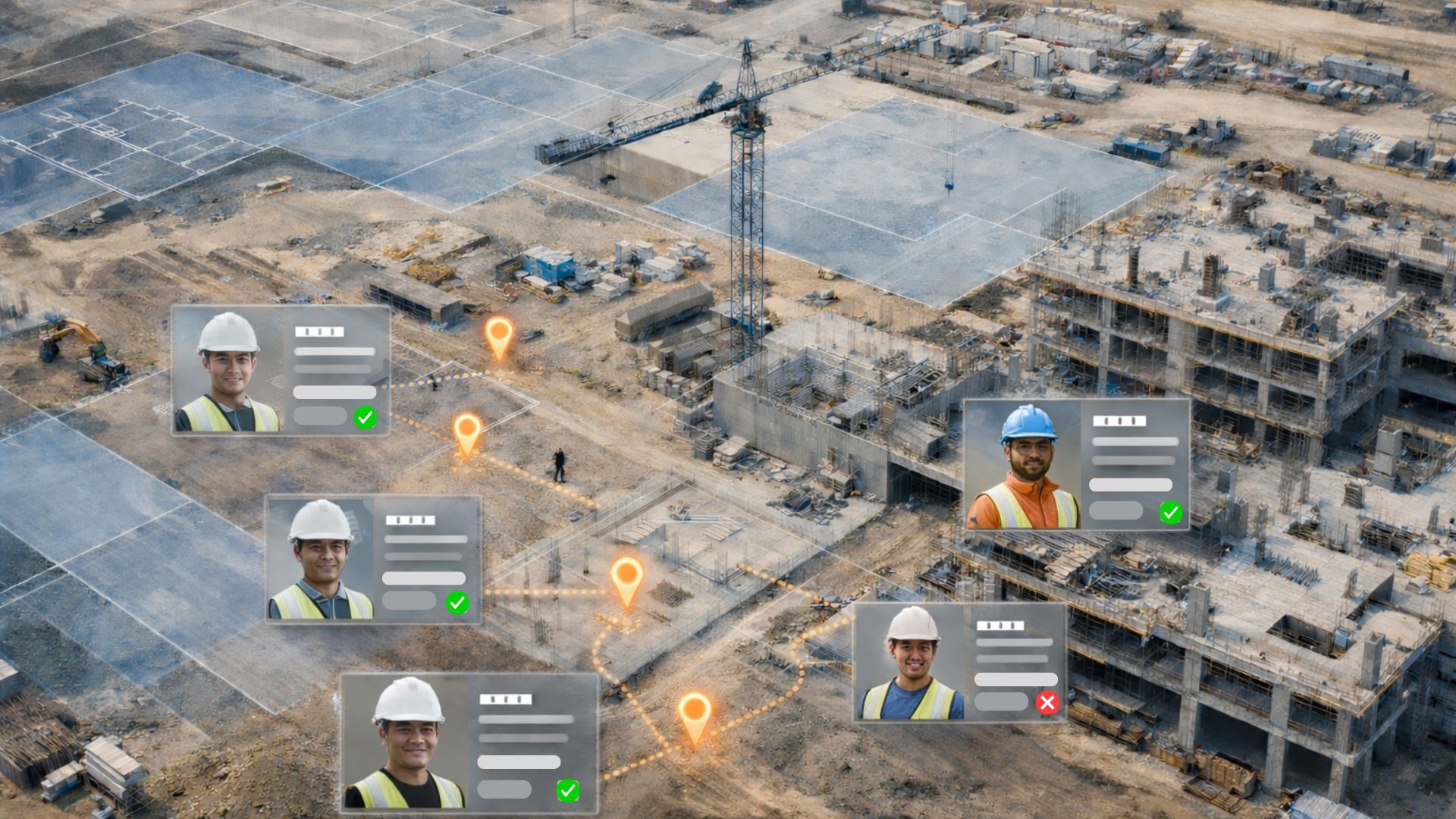
In 2025, we consolidated mission-critical signals into a single Command Centre view:
- Spatial Intelligence: Conflicting activities (e.g. work-at-height vs. crane operations) now surface directly on digital floor plans.
- Dynamic Access Control: Zone entry is governed by live Permit-to-Work (PTW) conditions, synced with manpower movement and 360° site visualisation.
- Role-Based Alerts: Notifications are now intelligently routed by role and location — ensuring a Safety Officer sees a breach instantly, while a Project Manager sees the high-level trend.
The result was evident: Less time checking systems. Fewer assumptions. Faster, more confident decisions on site.
Preserving continuity when teams change
On multi-year projects especially, people move. Supervisors rotate, safety officers change sites, and subcontractors reshuffle manpower.
The impact of turnover on the project can be detrimental.
Traditionally, accountability is tied to a name — so when that person rotates out, work stalls, often without anyone noticing.
We treated this as a system design flaw, not a HR problem.
This year, we reinforced role-based accountability across Hubble. Tasks and approvals are assigned to roles and groups, not just individuals. When a new Supervisor steps in, they inherit a live, structured queue of responsibilities — not a trail of unassigned emails to decipher.
Continuity becomes part of the workflow, ensuring progress never depends on perfect team stability.
Closing the loop: detection is not resolution
Most projects don’t struggle to detect issues. They struggle to close them.
It’s common to see safety findings logged without action, quality issues documented without rectification, and permits progressing even when site conditions changed. Follow-through depends on reminders and manual coordination outside the system.
In 2025, we tightened this action gap by automating the path from finding to fixing:
- AI-Triggered Action: Safety breaches detected via AI video analytics don’t just sit in a log; they automatically generate actionable Observations or Incident Reports with evidence attached.
- Immediate Escalation: Failed quality inspections trigger non-compliance reports (NCRs) and rectification workflows by default.
- Rule-Driven Closure: Issues move toward resolution through defined escalation paths, without manual chasing
SGBuildex: Turning compliance into readiness
This work connects directly to what’s coming next in Singapore.
SGBuildex isn’t just a new submission portal. It reflects a broader shift toward having construction data that is accurate at source, continuously in sync, and ready for exchange — not reconciled at month-end.
In 2025, we aligned more closely with this direction by strengthening upstream discipline in manpower and site data. As a selected SGBuildex integration partner, Hubble enables reporting to become a natural outcome of daily operations — not an additional process.
For teams, that means fewer last-minute reconciliations, fewer inconsistencies, and a smoother transition as submission requirements take effect.
Looking ahead to 2026
2025 was about strengthening foundations.
2026 will be about operating faster on top of them.
As regulations tighten and margins thin, the advantage will go to teams that don’t just use software, but operate within systems that keep work aligned, accountable, and moving — even as conditions change.
That’s what we built toward in 2025.
And that’s the platform we’re carrying into 2026.
Share this article
Explore Related Content
Stay up to date with our latest news features!
CPD Trade Data for SGBuildex — Mapping, Multi-Skilled Workers, and Mid-Project Changes

Mobile Biometric Check-In for SGBuildex CPD — Open Sites, Space Constraints, and Business Continuity